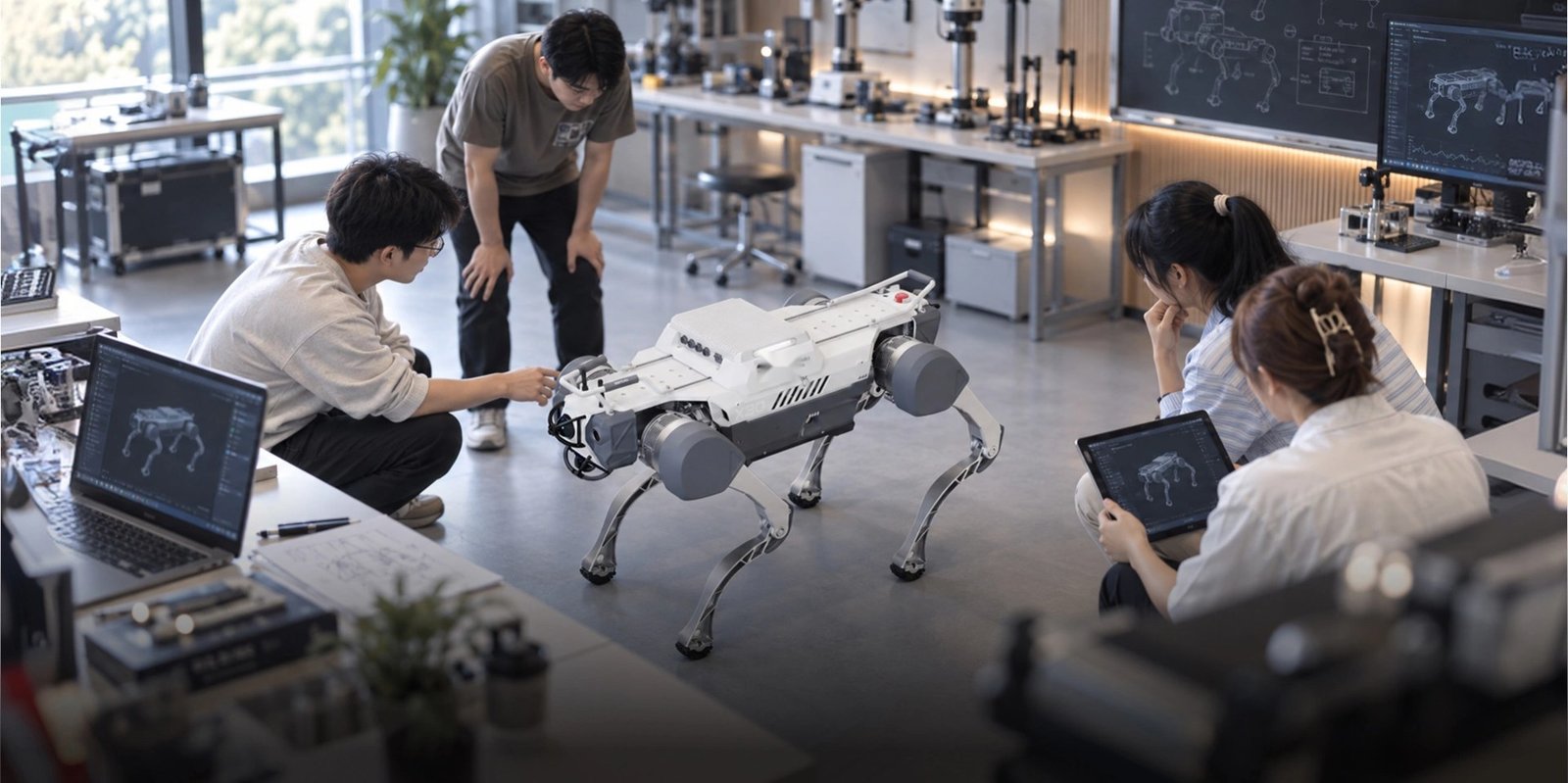

A laboratory is not a purchase order; it is a multi-year teaching and research system. That is the premise of Booster Robotics' joint laboratory programme, through which the company partners with universities to design, equip and support embodied AI laboratories. The programme delivers a complete embodied AI laboratory solution - robots, simulation infrastructure, curricula, teacher training, research collaboration and certification - built around the institution's own majors and ambitions.
What a Joint Laboratory Includes
Each build starts from the same menu and ends in a different room. The hardware layer spans the platforms a modern embodied AI programme needs: developer humanoids such as the Booster T1 and Booster K1, quadruped and wheeled-legged robots for mobility and industry scenarios, and the payloads and accessories that turn them into instruments. Around the hardware sit the layers that decide whether it gets used: a simulation development platform for policy training, a training ground for verification, curriculum materials mapped to courses, and structured training that brings the teaching team up to speed before the first students arrive.
Three Types, One Progression
Booster's laboratory designs follow three types, which institutions adopt singly or as a progression. The structure and principles laboratory teaches robot bodies - assembly, components, testing. The simulation and development laboratory is where algorithms are trained and verified through sim-to-real. The industry-specialised laboratory runs real sector projects - power inspection, emergency response, public services - with the quadruped and wheeled-legged fleet. A typical partnership starts where the faculty's strength is, then grows along the path as courses and research groups mature.
Evidence From Working Builds
The programme's reference points are deliberately varied. University laboratory builds show the teaching configuration working at semester scale; a perception-focused laboratory at a metrology university shows the research configuration; and the campus patrol deployment at a science and technology university shows Booster robots in operational - not educational - service on the same kind of campus. Together they answer the three questions every institution asks: will it teach, will it research, and will it work outside a lesson plan. The cases page summarises each deployment, and prospective partners are encouraged to judge the programme by those working rooms rather than by renderings of future ones.
Beyond Hardware: Courses, Teachers, Certification
The programme's services exist because hardware-only labs disappoint. Curriculum development aligns robot practice with credit-bearing courses, so the equipment is booked by the timetable rather than by enthusiasm. Teacher training gives lecturers and lab engineers hands-on command of the platforms and the RL toolchain before they have to teach them. Research collaboration connects the institution to a network of more than 30 leading research institutions and companies working on the same platforms. Competition practice turns motivated students into teams. And a structured certification path gives students a credential that employers in the robotics industry can recognise - the output that justifies the investment to university leadership.
Starting a Joint Laboratory
Partnerships begin with a planning conversation: your majors, student numbers, available space, existing equipment and the outcomes your institution must show - courses, papers, competition results, industry projects. From there we propose a laboratory configuration, phased if budget or space requires it, with delivery scheduled around your academic calendar. Institutions that want evidence before committing can review the deployments described on our cases page, including university laboratory builds and a campus patrol deployment, and talk to us about reference visits. Most partnerships sign a phased plan with named milestones - first courses taught, first team competing, first industry project delivered - so progress can be reported to university leadership in the same language as the funding application that paid for it.
Planning an embodied AI laboratory for your university? Compare the relevant product range and deployment scenarios to take the next step.