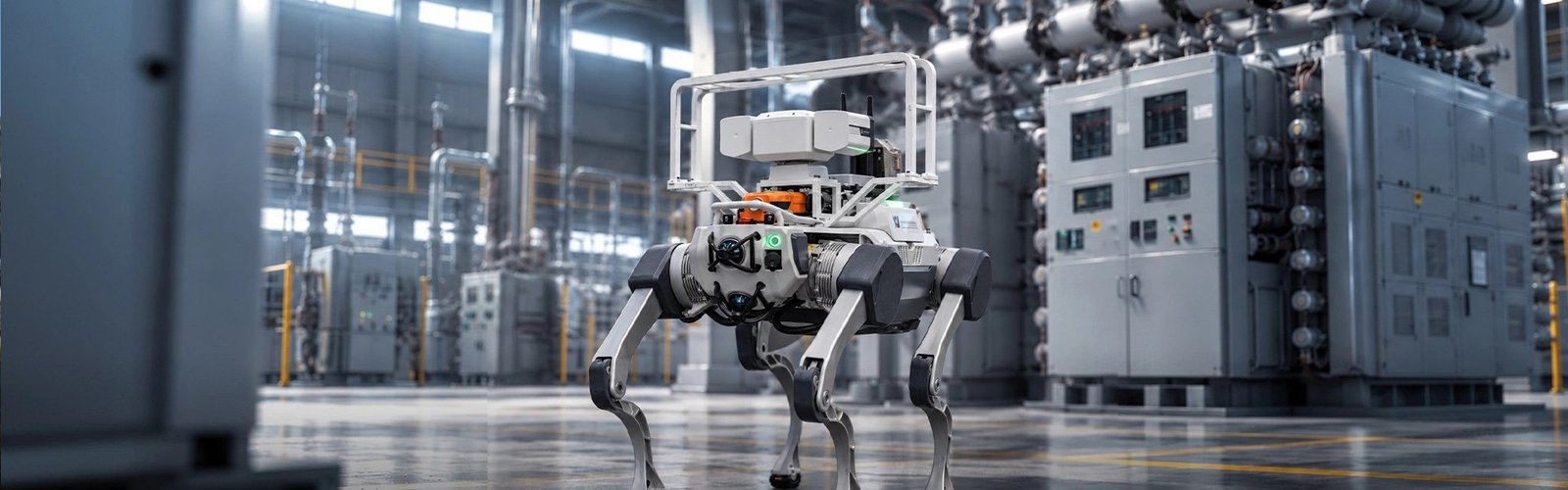

Visible-light imaging records what a scene looks like; thermal imaging records how it is heated. The two fail in opposite conditions. Visible cameras go blind in darkness, glare and smoke, but read text, colour and fine detail. Thermal imagers ignore darkness entirely and expose temperature differences - an overloaded connection, a recently run motor, a person in an unlit yard - yet cannot read a label or tell red from blue. A dual-spectrum gimbal camera exists because inspection work needs both truths about the same object at the same moment.
Two Spectra, Two Kinds of Truth
On patrol the pairing resolves the oldest ambiguity in security work: is that shape a person, a bin, or a shadow? The visible channel proposes, the thermal channel disposes - a warm, person-shaped signature at forty metres in darkness is a finding, not a guess. Readings that combine both channels carry the evidence a control room needs to act without sending someone to look.
Why the Gimbal Is Half the Product
Sensors bolted to a walking robot inherit the walk: every step pitches and rolls the view. A gimbal counteracts that motion, holding the camera steady and pointing where the task requires - level with a gauge, centred on a connection, tracking along a fence line - regardless of what the legs are doing underneath. Stabilisation is what turns thermal and visible streams into measurable data rather than suggestive footage: temperature readings need the target framed, and classification needs a steady image.
The mount also gives the payload its working envelope. Pan and tilt ranges decide which assets a robot can read without contorting its route; a patrol route is designed around viewpoints, and the gimbal's reach defines which viewpoints exist. When Booster scopes a payload fit from the payloads and accessories range, gimbal geometry is matched to the asset list first - the sensors are chosen second.
The Jobs Dual-Spectrum Earns Its Keep On
Electrical inspection is the canonical case: switchgear, busbar joints and motor housings announce failure thermally days before they fail visibly, and a quadruped on scheduled rounds with a dual-spectrum payload catches the announcement. Night patrol is the second: the thermal channel restores the robot's awareness in unlit areas where visible-only systems slow to a crawl. The third is emergency reconnaissance - through light smoke and darkness, thermal imaging finds heat sources and people, the exact information a commander needs before committing a crew.
These are the deployment patterns in Booster's industrial inspection and public safety solution, where dual-spectrum payloads ride the quadruped line on power, campus and emergency rounds. In each case the pattern is identical: the robot repeats a route, the gimbal frames the same targets, and the two spectra are archived together so trends - a joint warming week over week - become visible before failures do.
Reading the Specification Like an Inspector
Buyers should interrogate four numbers. Thermal resolution and sensitivity decide the smallest temperature difference the camera can honestly report. The temperature measurement range and accuracy decide whether readings are data or decoration. Visible-channel resolution and low-light performance decide identification quality at patrol distances. And the gimbal's stabilisation accuracy and slew range decide whether any of the above survives contact with a walking robot. Numbers quoted without the mount's performance are laboratory numbers.
Integration completes the picture: the payload must timestamp and geotag its readings into the robot's report stream, so a thermal anomaly arrives with its map position and visible-light twin attached. A dual-spectrum camera that produces only video files has delivered footage; a patrol programme needs findings. Booster's payload integration is specified to deliver findings - ask us to walk through a sample inspection report for your asset list.
One Payload, Chosen Deliberately
Dual-spectrum gimbals are not the default answer to every patrol: daylight-only routes with simple presence checks may need no thermal channel at all, and payload mass and power draw are real budgets on a legged platform. The discipline is matching payload to the reading list - the actual assets and events the programme exists to capture. Start from that list, and the case for heat-and-light usually makes itself.