
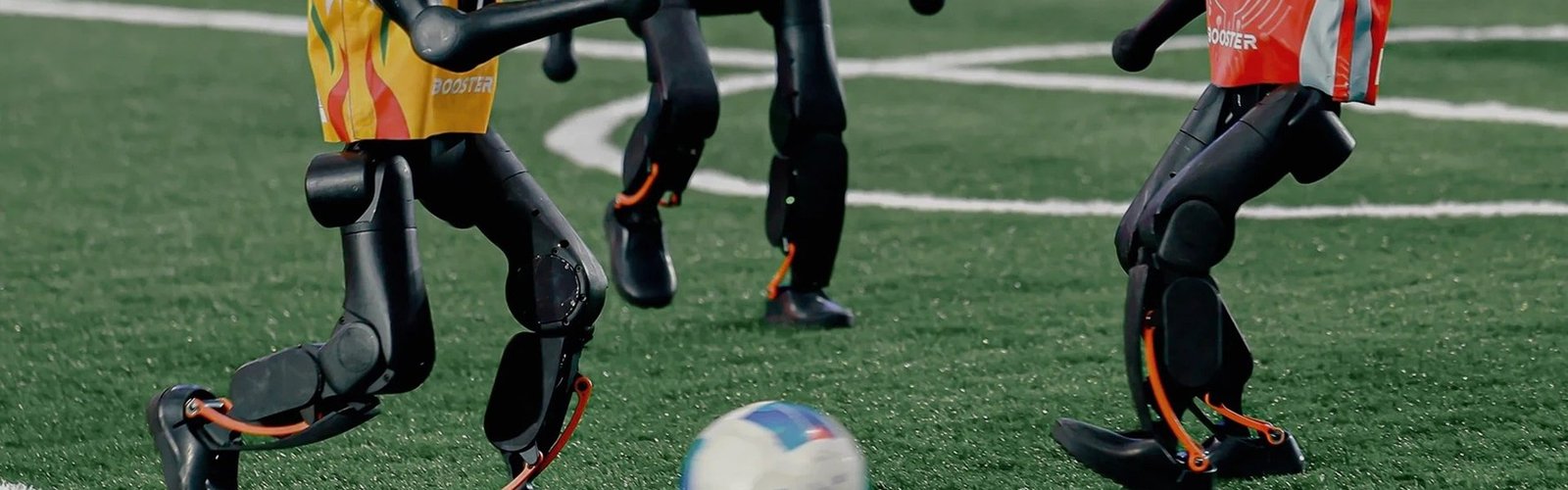
A show floor is the least forgiving test environment in robotics: hard floors, curious crowds, eight-hour days and no second takes. Preparing a robot for a quadruped robot demonstration - or a humanoid match, or a baggage line running all day - is therefore treated at Booster Robotics as a quality exercise first and a marketing exercise second. This article explains the preparation routine our exhibition units go through, because the routine itself is one of the most honest things a supplier can show a buyer.
Exhibition Units Pass the Customer Test Gate
There is no separate, gentler standard for show robots. Units selected for exhibition duty pass the same documented pre-shipping gate as customer machines: joint-by-joint mechanical checks, walking and motion verification, sensor and compute validation, and software version recording. The discipline matters for a simple reason - visitors are entitled to assume the robot on the stand represents the robot they would receive. You can read the full gate in our article on how every Booster robot is tested before shipping; exhibition units go through it without shortcuts, and the records travel with them.
Shipping Software, Not Show Software
The most common exhibition trick in robotics is a special demonstration build: tuned for one routine, on one floor, with an engineer hovering. Booster's rule is that exhibition robots run the shipping software and the standard policy set - the same walking, recovery and navigation behaviours customers receive. A Jueying Lite3 working a demonstration route is running its production configuration; a T1 playing football is running the competition-proven policies supplied to teams. If a behaviour cannot survive a full show day on the standard build, the honest answer is to fix the build, not to hide it.
Rehearse the Job, Not a Trick
Demonstration programmes are designed as work samples. Quadrupeds rehearse patrol and inspection rounds with their payloads fitted; humanoids rehearse match play and classroom routines; the baggage system rehearses continuous transfer runs with real suitcases. Rehearsal verifies the boring essentials: turning space measured against the real stand layout, charging and battery rotation planned across the show day, spare units and parts packed against the failures that hard floors and long hours eventually produce. A demonstration that has been rehearsed as a job reads differently to professional visitors - it has a rhythm, and it can answer interruption without collapsing.
Transport and Batteries Follow Export Routine
Exhibitions usually mean shipping robots internationally, so preparation uses the same routines as customer export orders: protective crating designed around each model's fragile points, documentation packed with the machine, and battery transport handled under the applicable safety regime - the flagship T1, for example, carries UN38.3 among its certifications. This is deliberate. A supplier whose show logistics are improvised will improvise yours too; a supplier whose exhibition crates look like customer crates is showing you its delivery system working in public, under deadline, which is the most relevant demonstration of all.
The Team Is Part of the Preparation
Finally, the people are prepared as carefully as the machines. Stand teams are briefed to run robots, not scripts: engineers who can answer specification questions with the basis of each figure, demonstrate fall-and-get-up on request, show the developer tools behind the behaviours, and write down the questions they cannot answer for follow-up. For quadruped demonstrations, operators practise the visitor interactions that make a demo informative - placing an obstacle on the route, asking for a payload reading at a chosen point - so the audience directs the test rather than watching a loop.
If you are planning to evaluate robots at a show, use our preparation standard as your checklist for every stand you visit - and start with ours. Compare the relevant product range and deployment scenarios to take the next step.


