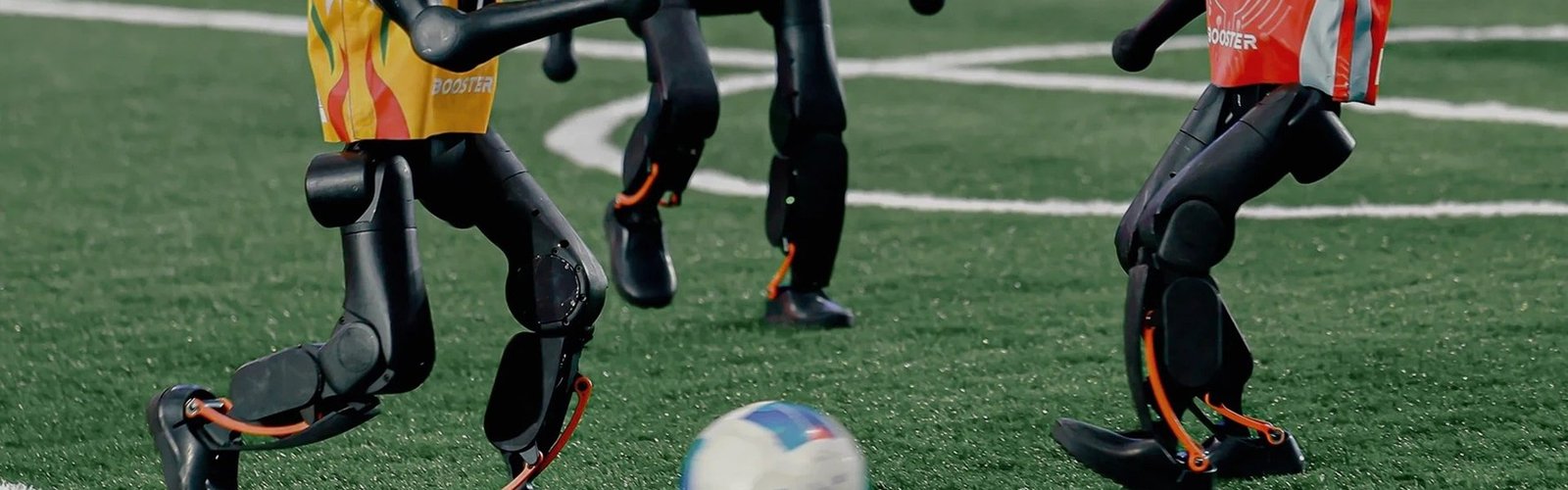
Certification lists are the least-read line of a robot specification and among the most consequential. Those abbreviations decide where a humanoid may be sold, how it may be shipped and whether customs waves it through or warehouses it. This guide to humanoid robot certifications decodes the set carried by the Booster T1 - CE, FCC, CB, KC, MIC, WPC and UN38.3 - and explains what each mark actually testifies. Booster's full status table, including the models still in process, lives on our certifications page.
CE and FCC: The Two Big Gates
CE marking is the European gate: the manufacturer's declaration, backed by testing, that the product meets EU requirements for electrical safety and electromagnetic compatibility - it may not interfere with other equipment, nor be upset by it. FCC certification is the American counterpart on the radio and emissions side, administered under the Federal Communications Commission's rules for devices that emit radio-frequency energy, as every Wi-Fi and Bluetooth robot does. A humanoid holding both can be offered across the European and North American markets without a per-country detour - which is why these two appear first in any export conversation.
CB, KC, MIC, WPC: The Regional Keys
The CB Scheme is the passport system behind national certificates: test once under the international IECEE programme and member countries accept the report toward their own marks. KC is South Korea's mandatory certification for electrical and radio products; MIC is Japan's radio conformity mark under its Ministry of Internal Affairs and Communications regime; WPC is India's Wireless Planning and Coordination approval for radio equipment. Each sounds bureaucratic until a shipment stops without one. The T1's list - spanning Europe, the US, Korea, Japan and India alongside the CB report - reflects how widely research and education customers are spread, and how expensive retroactive certification is compared with designing for it.
UN38.3: The Battery's Travel Permit
UN38.3 is the odd one out: not a product approval but a transport test series for lithium batteries - altitude simulation, thermal cycling, vibration, shock, short-circuit and more - required before lithium cells and packs may be shipped by air and accepted by carriers and freight forwarders worldwide. Every humanoid is, from a logistics desk's viewpoint, a lithium battery with a robot attached. A model without UN38.3 test summaries faces sea-freight timelines or outright carrier refusal, whatever its other marks. When a delivery date matters, this is the line to verify first.
Reading a Certification List Like a Buyer
Three checks sharpen any evaluation. Scope: does the certificate cover this exact model and configuration, or a sibling? And market match: line the list up against the countries you will actually deploy and ship through, not the countries that sound impressive. A shorter list covering your markets beats a longer one that misses them.
Why We Publish the List Plainly
Certifications are unglamorous, testable facts - a model either holds a mark or it does not - and they are therefore a good test of a supplier's general honesty. Grand claims invite adjectives; a certificate is a document. We publish the T1's full list because our customers in 20+ countries clear robots through real customs desks, and because a supplier straight about certificates is usually straight about cycle times, payloads and the rest of the sheet.
Importing humanoids into a specific market and unsure which marks you need? Compare the relevant product range and deployment scenarios to take the next step.