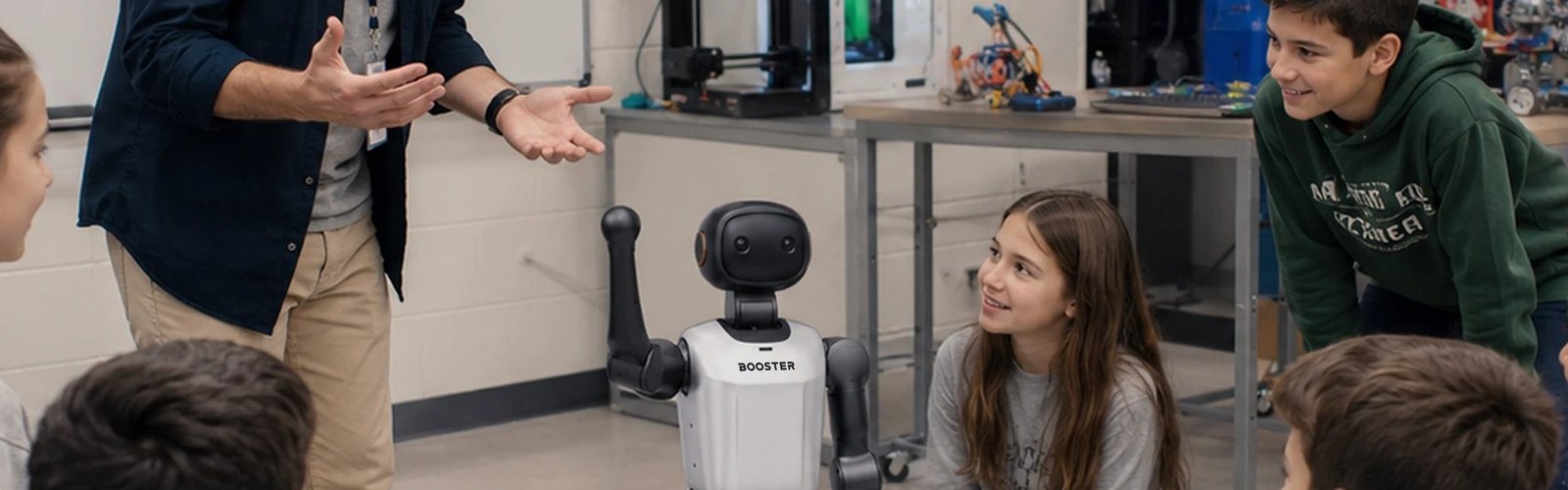
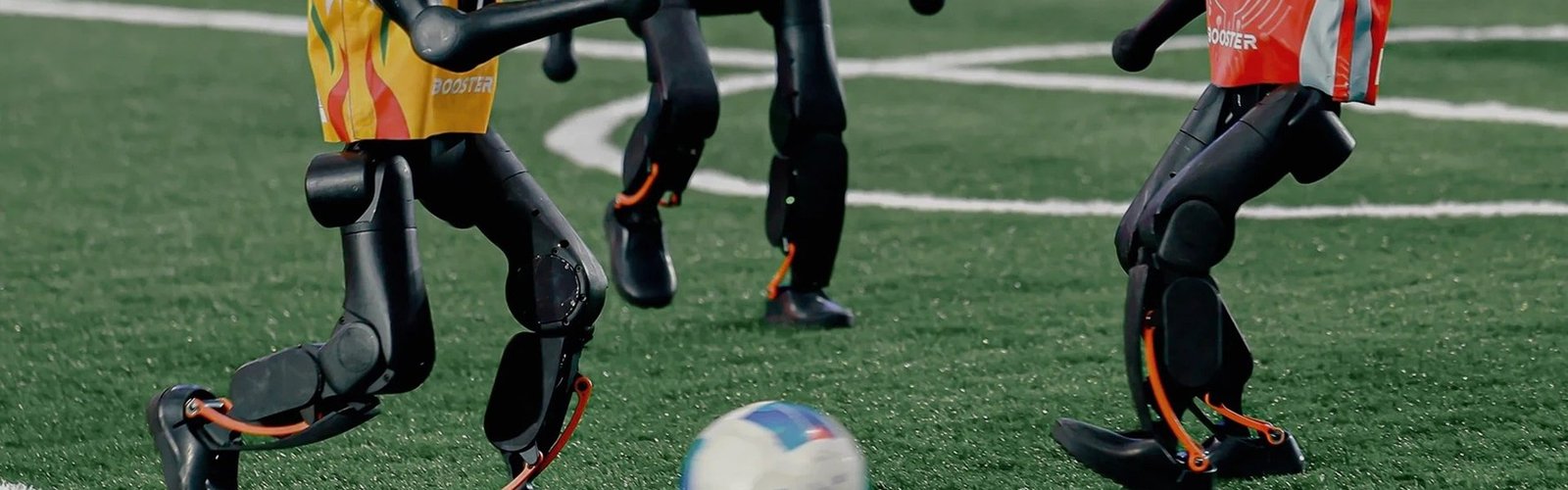
A baggage handling robot is easy to admire in a render and hard to judge in one. The honest test is a pile of real suitcases: scuffed hard shells, soft duffels, cases with straps hanging loose and wheels that roll at the worst moment. That is why Booster Robotics runs its exhibition and customer demonstrations with real luggage rather than polished props. This guide explains what happens in a DawnAnt live demo, what an airport or integrator team should watch for, and which numbers can be verified on the spot instead of taken on trust.
Start With Standard Bags on the Rail
The core of the demo is the DawnAnt baggage transfer robot working its standard flow. A 6-DoF collaborative arm with a 2,000 mm reach identifies each approaching case, plans a grip and loads it for transfer, at rates up to 180 pieces per hour. Watch the identification step as much as the lift: the system has to decide where the case is, how it is oriented and which gripping strategy fits before the arm commits. Consistent decisions across a mixed run of cases matter more than one fast, rehearsed cycle, so ask for a longer continuous run and count completed transfers yourself.
Then Ask for the Awkward Bags
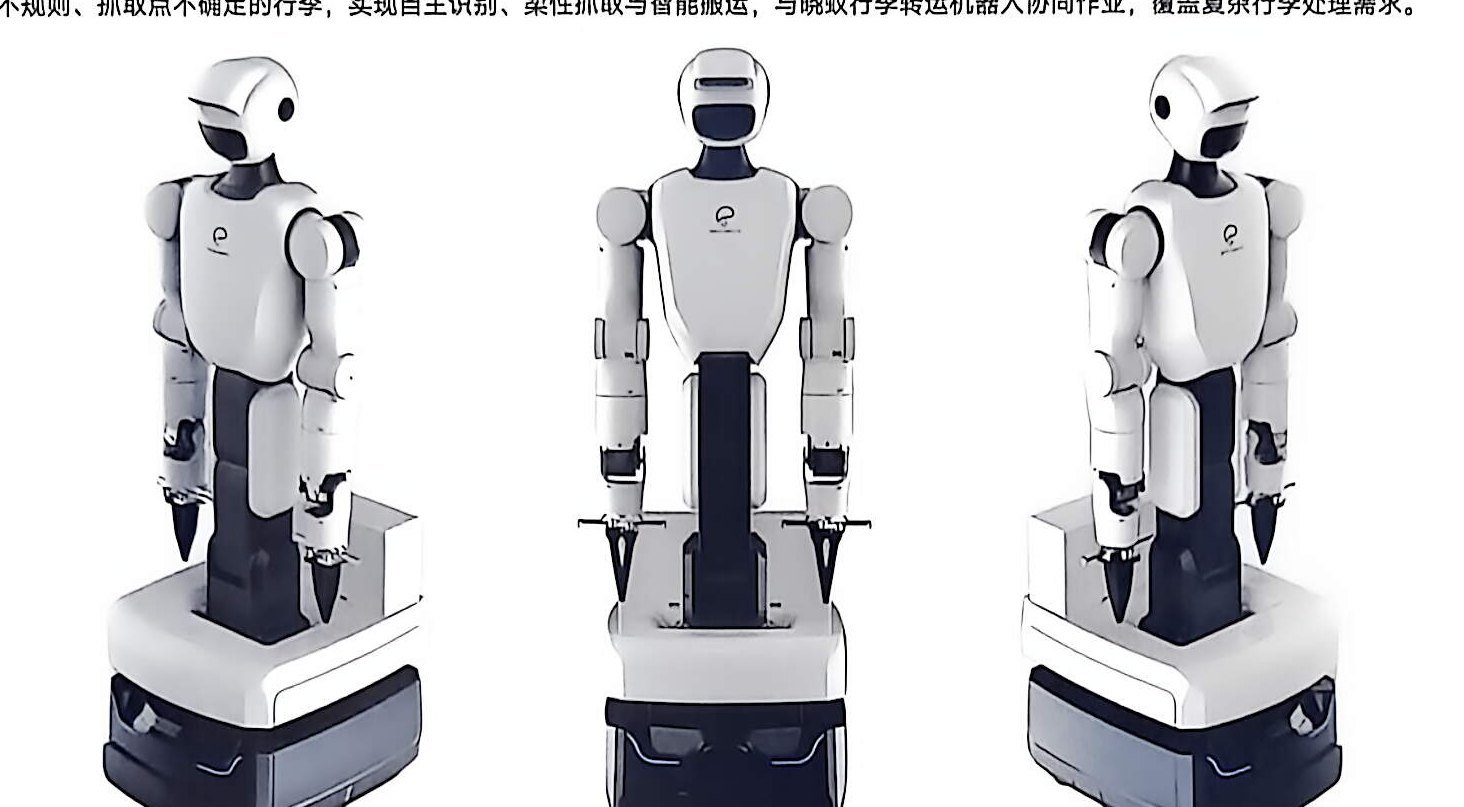
Every baggage hall has a second stream: backpacks, handbags, soft holdalls and odd shapes that no fixed gripper geometry was designed for. In the Booster model this stream belongs to the wheeled dual-arm humanoid robot, and a good demo shows the division of labour working live rather than describing it. This is the 80 / 10 / 10 collaboration pattern in action: roughly 80 percent of bags flow through automated standard handling, about 10 percent go to the flexible humanoid, and about 10 percent stay with people for the genuinely exceptional. Ask what happens to a bag the robot declines - the hand-off path is part of the system, not an embarrassment.
Check the End Effector Against the Surface
Gripping is where baggage demos succeed or quietly cheat. DawnAnt uses a composite end effector combining a suction cup and a gripper, with a gripping range of 240 to 540 mm, so smooth hard shells and softer, textured cases are handled by different strategies in the same cycle. In the demo, ask to see both: a rigid case lifted on suction, then a soft bag taken by the gripper. Watch the release as carefully as the pick. A controlled set-down, case after case, is what protects contents and downstream equipment; a drop of even a few centimetres, repeated thousands of times a day, is a claims department problem wearing a robot costume.
Follow One Bag Through the Data
The physical transfer is only half the product. In the full smart airport solution, every bag is recorded as it moves, giving the operation full-process digital traceability: which unit handled it, when, and where it went next. During a demo, pick one case and ask the team to show you its record afterwards. If the data trail exists and is readable, the system can support the questions airports actually face - a passenger query, a mishandling investigation, a performance review by hour and by unit. If the record cannot be produced on the spot, the traceability claim is a slide, not a feature.
What to Time, Count and Write Down
Bring a short score sheet. Time a continuous run and calculate the real transfer rate against the 180 pieces-per-hour figure. Count interventions: how often did an operator touch a bag, reset a case or clear a fault? Note the footprint: DawnAnt's main unit measures 1200 x 750 x 759 mm and works along a modular rail, which is why it can be introduced into an existing terminal layout rather than demanding a new hall. Finally, ask about duty pattern - the system is built for 7x24 operation through peaks and holiday surges, so ask how staffing and maintenance windows are handled in that model.
Planning to evaluate baggage automation for a terminal or an integration project? Compare the relevant product range and deployment scenarios to take the next step.