Universities and colleges rarely struggle to buy laboratory robots; they struggle to staff the laboratory a year later, when the platform has updated, the confident teacher has rotated away, and the course depends on whoever can be persuaded to run it. Robotics teacher training is therefore not a launch accessory but core infrastructure. This article describes the practical model Booster builds into its education programmes: a staged pathway from first contact to certified delivery, with refreshers treated as part of the design.
Stage One: Platform Mastery, Hands On the Hardware
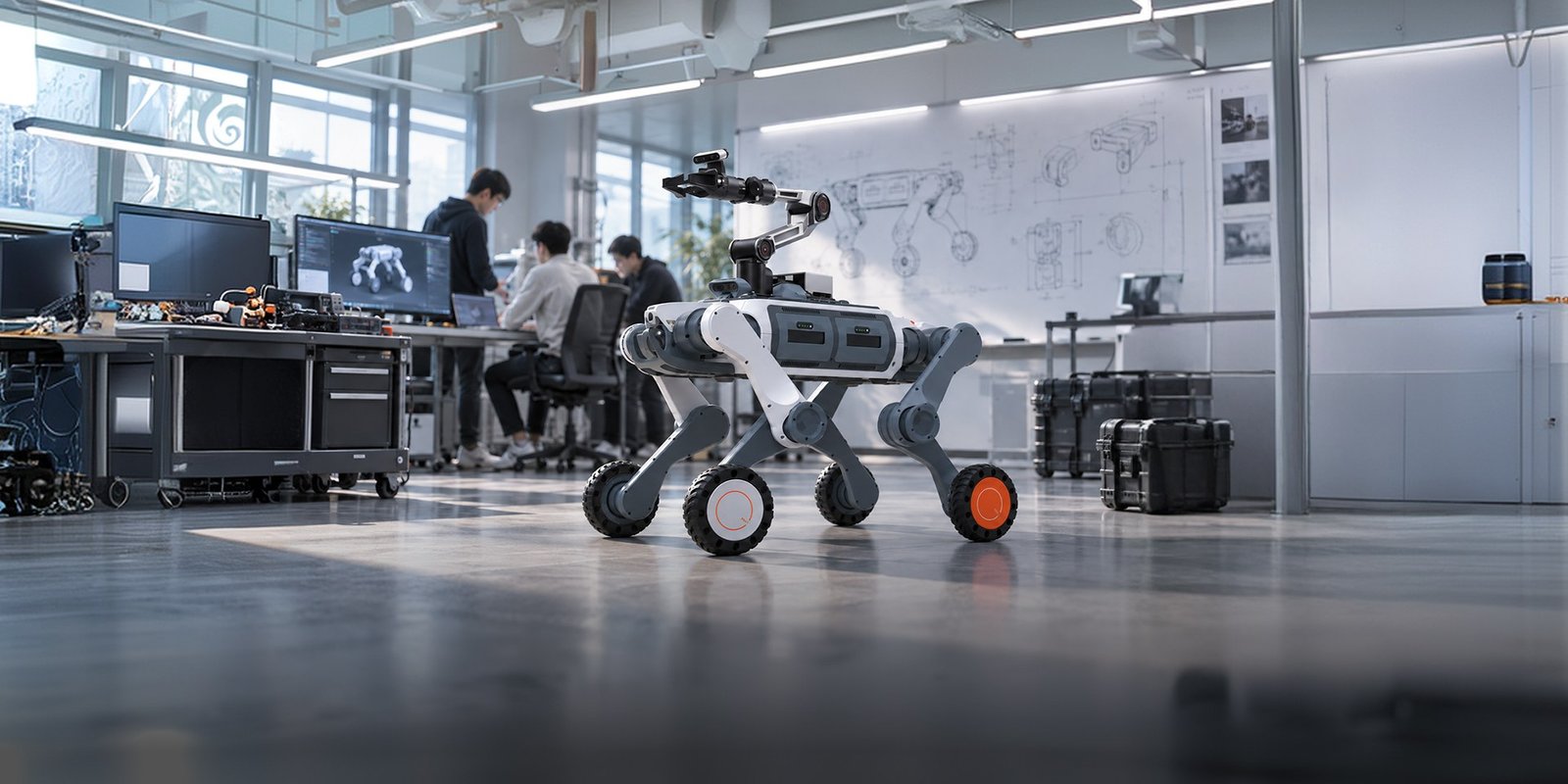
Training begins where teaching will happen - on the machines. Instructors work through the platform as their students will: unboxing and inspection routines, safe handling, basic operation of the humanoid and quadruped lines, battery and charging discipline, the fault states and their recoveries. The standard is operational confidence, not familiarity: a teacher who has personally recovered every common fault teaches troubleshooting as experience rather than as a manual excerpt. This stage also covers the laboratory itself - layout, session setup and the safety framework students will be held to.
Stage Two: The Toolchain, From Simulation to Deployment
Embodied AI teaching runs on the development workflow: build a behaviour, verify it in the simulation environment, deploy to hardware, evaluate. Teachers train on the same simulation development platform and developer tools their classes will use, completing the full cycle on real course exercises - including the failures, deliberately induced, that students will meet in week four. A teacher who has only run the happy path will lose the room at the first deployment error; one who has diagnosed it personally turns it into the lesson. Institutions should protect this stage in the budget; it is the one most often cut and the one whose absence is most visible in the classroom.
Stage Three: Classroom Delivery and Assessment
Technical mastery is half the qualification; the other half is teaching with robots in the room. This stage covers session structures for mixed-ability cohorts, rotation and access management on shared hardware, assessing embodied work - logs, demonstrations, verification runs - and running competition-linked activities for programmes that use them. Co-teaching is the bridge: the provider's engineers support the first live deliveries, with the institution's teachers leading progressively more of each session until support is a phone call rather than a presence.
The Refresher Cycle: Training as a Subscription to Reality
Embodied AI updates on an annual rhythm - new model capabilities, toolchain releases, evolving industry scenarios - and a one-off training decays on the same rhythm. The model therefore schedules refreshers as part of the laboratory partnership: short, focused updates tied to platform releases and the academic calendar, plus periodic industry immersion so scenarios taught in the lab track the field. A simple register of who has completed which update keeps the cycle honest when timetables get busy. Institutions should ask any provider, in writing, what teacher development looks like in year three. The answer distinguishes a programme from a purchase.
Certifying the Teachers Themselves
The pathway closes with the teachers holding a credential of their own - demonstrated platform and delivery competency, assessed practically. That certification does quiet institutional work: it makes capability visible to leadership, portable across staff changes, and auditable when programmes are reviewed. A laboratory whose expertise is certified survives the departure of any single enthusiast, which is the point at which an embodied AI lab becomes an institution rather than a project.
Staffing an embodied AI laboratory and planning the teaching team? Compare the relevant product range and deployment scenarios to take the next step.