
Every humanoid robot platform specification now carries a compute figure in TOPS, and every sales conversation treats it as a league table. TOPS is a real and useful number - but only if you know what it counts, what work it will actually be doing, and what questions expose a figure that is marketing rather than engineering. This article explains robot brains plainly, then reads two real specifications the way an evaluation team should.
What TOPS Actually Measures
TOPS stands for tera operations per second - trillions of the simple arithmetic operations that neural network inference consists of. It measures the peak rate of the AI accelerator (typically the GPU or a dedicated AI chip) under ideal conditions. Two cautions follow. Peak is not sustained: real workloads rarely hold the peak. And operations are not interchangeable across precisions and architectures, so cross-brand TOPS comparisons are approximate at best. Treat the figure as a class indicator - this machine's brain is in this league - not a photo-finish ranking.
Where a Humanoid's Compute Goes
A working humanoid spends its compute continuously, in parallel. Perception pipelines turn camera and depth data into a model of the surroundings. Policy inference - the trained behaviours - runs at control rates, deciding joint actions many times per second. Around those sit localisation, logging, safety monitoring and, increasingly, the vision-language models behind interaction and task understanding. The budget question is therefore concurrent headroom: can the platform run your research stack alongside the walking it must never drop? A robot that thinks brilliantly standing still and stumbles when its brain is busy is a laboratory anecdote, not a platform.
Reading Two Real Specifications
The Booster range shows the honest format. The flagship T1 specifies a 14-core CPU paired with an AGX Orin GPU at 200 TOPS - the processor named, the figure attached to identifiable hardware a buyer can look up. The compact K1 specifies GPU compute at 100-200 TOPS, a range reflecting configuration, stated as a range rather than rounded up to its flattering end. Both figures share the property that matters most: the compute is on the robot. A platform whose impressive brain lives in a tethered workstation has a cable where its autonomy should be - ask, every time, where the TOPS physically sit.
How Much Does Your Work Need?
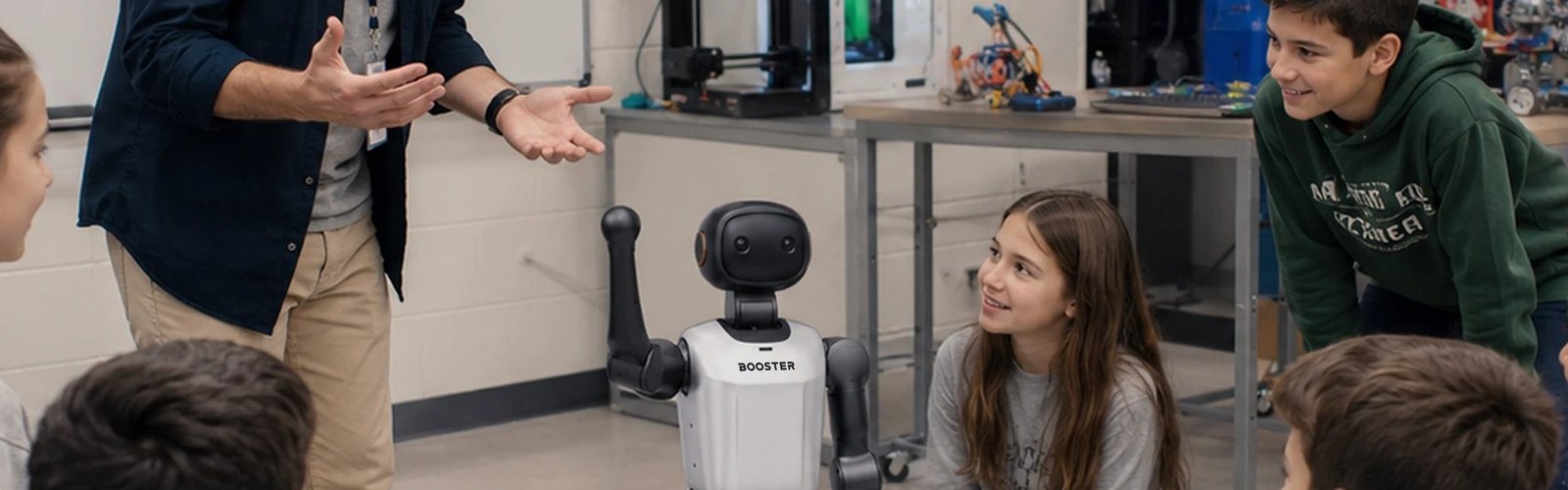
Match the brain to the programme. Locomotion and control research is comparatively frugal - policies are compact, and control rates matter more than raw inference volume. Perception-heavy work - richer vision models, scene understanding, multi-camera pipelines - eats compute quickly. Vision-language-action research, the current frontier, is the hungriest of all and justifies flagship headroom. Education programmes sit lower: the K1's class of compute carries perception and policy work at teaching scale comfortably. The expensive mistake is symmetric - buying flagship compute for classroom work, or classroom compute for a VLA research group.
The Questions to Ask With the Number
Four questions convert a TOPS figure into knowledge. Which processor delivers it, exactly? Is it on board, untethered? What runs concurrently in the supplier's own demonstrations - perception, policy and logging together, or one at a time? And what does the thermal and power budget do to sustained performance across a full working session? A supplier who names the silicon, demos the concurrent load and publishes endurance beside compute - as the T1 specification does with its walking and standing figures - is selling engineering. The TOPS was never the point; the work it lets you do is.
Matching compute to a research or teaching programme? Compare the relevant product range and deployment scenarios to take the next step.