
Classic robot software is a pipeline: perception names the objects, a planner decides the sequence, a controller moves the joints, and an engineer wrote the rules connecting them. A Vision-Language-Action (VLA) model collapses that pipeline into a single learned system: camera images and a language instruction go in, robot actions come out. The idea borrows directly from large language and vision models - if a network can learn the statistical structure of text and images at scale, it can learn the structure of physical tasks too. This article explains how VLAs work, what they do well and where the honest limits sit.
How a VLA Is Put Together
The typical VLA starts from a vision-language backbone - a model already trained on vast image and text data, which gives it concepts: suitcase, strap, red, fragile, on top of. Robot training data then teaches the physical side: demonstrations and teleoperated runs pairing scenes and instructions with the actions that accomplished them. The model learns to tokenise motion the way language models tokenise words - predicting the next action chunk given everything it sees and has been told. The result generalises surprisingly: a model trained on enough varied handling can approach a bag it has never seen, in a hall it has never worked, from an instruction phrased a new way.
What VLAs Are Genuinely Good At
Generality is the real prize. Traditional automation handles the cases it was programmed for; a VLA handles families of cases, absorbing variation in objects, lighting and phrasing that would each have been a separate engineering ticket. Language becomes a practical interface - retasking the robot is closer to instructing a new colleague than commissioning a software change. And because the backbone arrives pre-loaded with visual and linguistic knowledge, each new task needs far less task-specific data than training from scratch. For environments like baggage halls, where the object stream refuses to standardise, that generality is exactly the missing property.
The Honest Limits
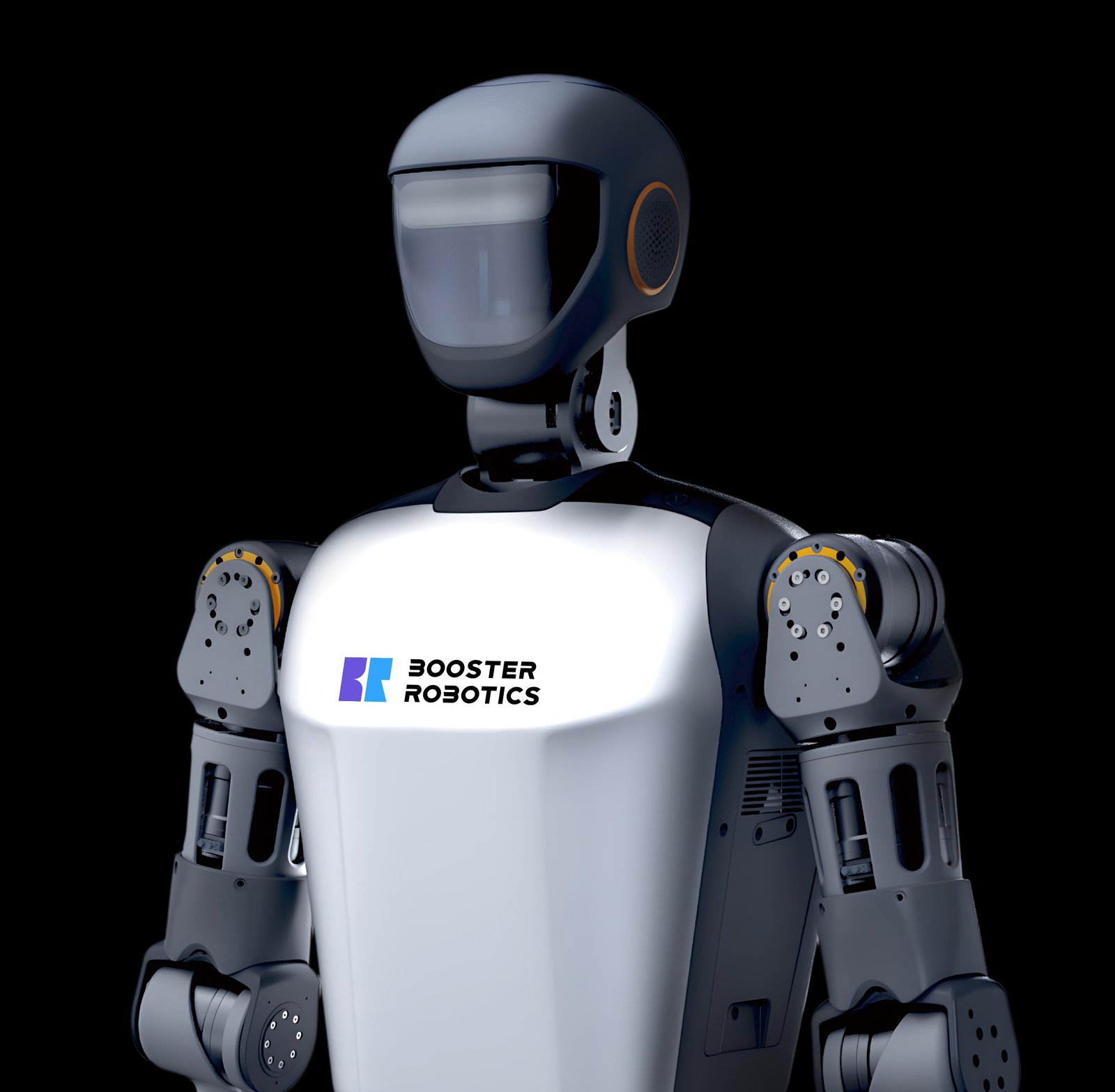
VLAs are not magic, and buyers should hear the limits from the supplier before the pilot does. Precision is statistical: a VLA can be fluently almost-right, which is fine for approaching a bag and unacceptable for a final millimetre. Data appetite remains large - rare physical situations are rare in training data too. Latency and compute are real constraints on a moving machine. And a pure VLA is blind beyond its cameras: it cannot feel a grip slipping. That last limit is why production architectures extend the pattern - Booster's VTFLA architecture adds tactile and force channels to the vision-language-action core, closing the loop the camera cannot.
VLAs Inside a Working System
In deployment, the VLA is one layer among several: scheduling decides which robot takes which task, safety systems bound what any policy may attempt, and the model's actions execute through controllers that respect the machine's physics. Developer tooling matters here - the developer tools and RL framework around a platform are how users inspect behaviour, add training data for their own edge cases and verify a policy before it runs a real hall. Evaluating a VLA supplier means evaluating that whole stack, not a demo video of the model alone.
Questions That Separate Claims From Systems
Ask: What robot data was this trained on, and how much of it resembles my environment? What happens on an instruction the model cannot ground - does it ask, refuse or guess? How are failures logged, and can my team add corrective data? What runs on the robot and what runs in the cloud, and what happens when the connection drops? A supplier with a real system answers all four without reaching for adjectives.
Exploring embodied AI for a handling or service application? Compare the relevant product range and deployment scenarios to take the next step.